
Going by the strict criteria set, only Maharashtra, Tamil Nadu, Gujarat, Karnataka, Uttar Pradesh, Andhra Pradesh, Madhya Pradesh, and Haryana qualify for such extra borrowing, as of now.

Combined profit before tax of 81 firms down 37.5% y-o-y, worst show in at least 3 years.

RIL, however, remains miles ahead of TCS in other financial parameters such as total revenue, operating profit, net worth, assets, and market capitalisation.

Such cold-shoulder by banks also indicates a credit freeze that is hard to overcome, unless the government comes out with credit guarantee schemes for loans given by banks. Since that is not happening, and there is no indication of that too, banks are not willing to listen to RBI prodding.

'India's sizeable foreign exchange reserves should serve as a buffer.'

Corporate revenues will decline for a third consecutive quarter in March on a YoY basis - one of the worst shows by these companies in many years.

Indians face COVID-19 with record debt, stalled income.

Profitability and cash reserves have halved since the global financial crisis.

While efforts are being mounted on a war footing to arrest its spread, COVID-19 will impact economic activity in India directly through domestic lockdown. The second-round effects, it said, would operate through a severe slowdown in global trade and growth.

The combined market capitalisation of the top 873 family-owned companies was down 26.3 per cent year-on-year (YoY) to Rs 61.8 trillion at the end of trading on Tuesday. It had grown 6 per cent in FY19 and nearly 20 per cent in FY18.
Some of the top indebted companies likely to face financial headwinds in the coming quarters include NTPC, PowerGrid, Tata Steel, Adani Power, JSW Steel, UPL, and Steel Authority of India. Together these 201 companies owed Rs 14.9 trillion to their lenders at the end of September 30, 2019, up 4.1 per cent year-on-year (YoY) during the first half of FY20.
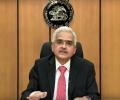
The RBI on Friday said it will give banks Rs 1 trillion through targeted long-term repo operations (TLTROs), of up to three-year maturity, to deploy in "investment-grade corporate bonds, commercial paper, and non-convertible debentures over and above the outstanding level of their investments in these bonds as of March 27, 2020."

In the manufacturing sector, output is expected to decline by about 70 per cent as only food-processing, and drugs and pharma industries are allowed to operate while other segments, such as engineering and metals, have shut operations.
To ease pressure due to the coronavirus lockdown, corporate have asked banks and the government for a six-month liquidity line, so that they can pay off their suppliers and employees.
The volume in the anonymous trading platform, NDS-OM, was Rs 7,210 crore - less than half the normal volume, but not as bad as the start of the day indicated.
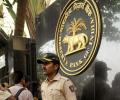
The idea is to keep the RBI's information technology (IT) infrastructure in top shape to run the payments and settlement system uninterrupted 24x7, and run the full gamut of RBI functions from the secured data centres, as nearly 14,000 RBI staffers, except the senior-most management, work from home.

Minutes of the MPC meeting show Das felt economy needs more monetary stimulus as inflation outlook remains uncertain.

Vodafone Idea's net worth (or shareholders' equity) was down 73 per cent year-on-year to around Rs 17,600 crore at the end of the December 2019 quarter after the company reported a net loss of around Rs 6,400 crore during the quarter. Cumulatively, the company has lost nearly Rs 45,000 crore in the last four quarters, eroding its net worth to its lowest level in three-year. Analysts said a such a low level of net worth, coupled with continuing losses in operations, ruled out the possibility of the company getting fresh loans from lenders to fund its adjusted gross revenue (AGR) dues of Rs 54,000 crore.

Nominating Das, the Banker magazine, which announced the award, said India's banks have faced a series of challenges, from non-performing loans to issues around fraud. Faced with these challenges, Shaktikanta Das has taken steps to bring banking in India up to standard via a restrained approach to governance.
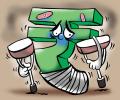
The Indian rupee is down nearly 2 per cent against the US dollar since the beginning of January 2019. Experts attribute the Indian rupee's relatively poor performance to a sharper-than-expected fall in economic growth in India.
 © 2026 Rediff.com - Investor Information - Advertise with us - Disclaimer - Privacy Policy - Sitemap - Feedback - About us - Terms of use - Grievances